
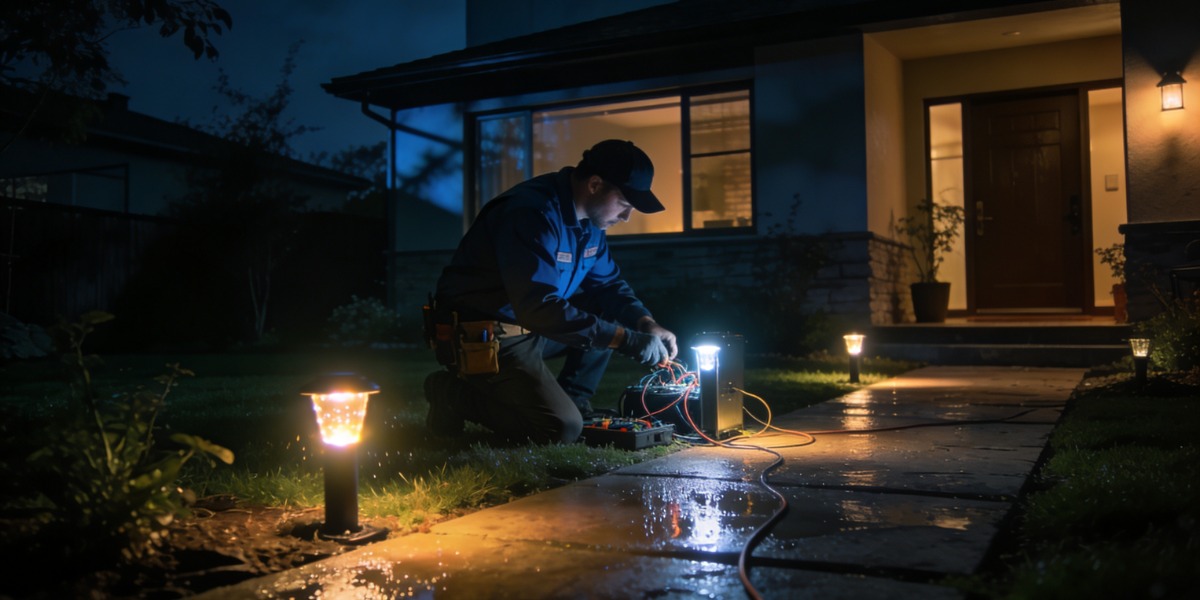
A properly illuminated exterior makes pathways easier to navigate, strengthens security, and creates a welcoming atmosphere after sunset. Still, even well-designed systems can develop issues over time because outdoor fixtures constantly face rain, dirt, temperature changes, moisture exposure, and natural wear on wiring components. Small electrical problems may begin quietly, yet they often grow into larger failures when ignored for too long. Identifying these issues early helps homeowners avoid costly repairs, inconsistent performance, and complete system outages.
Professional troubleshooting keeps outdoor lighting operating safely and efficiently while protecting long-term durability. With routine inspections and timely repairs, homeowners can maintain dependable lighting systems that continue performing properly throughout every season.
Why Outdoor Lighting Problems Occur
Outdoor lighting systems operate in challenging conditions every day. Rainfall, moisture buildup, dirt accumulation, landscaping activity, and changing temperatures all place stress on fixtures and electrical connections. Over time, exposure to these environmental conditions can weaken seals, corrode wiring, and damage internal components.
Installation quality also affects long-term reliability. Improper wiring methods, overloaded transformers, or low-quality components may lead to recurring electrical issues that become difficult to diagnose later. Routine inspections help identify these small concerns before they create larger system failures or expensive replacements.
Most Common Outdoor Lighting Issues
Flickering Outdoor Lights
Flickering lights often signal an underlying electrical issue that deserves immediate attention. Loose wiring connections commonly interrupt power flow, which causes fixtures to flash inconsistently. Failing LED drivers or aging bulbs may also create unstable illumination that becomes more noticeable over time. Voltage inconsistencies across the system can contribute to flickering as well, especially in larger properties with long cable runs. Moisture entering internal fixture components creates another common source of instability because corrosion interferes with electrical contact points.
Many homeowners ask, “Why are my outdoor lights flashing on and off?” In many cases, the answer involves loose connections, transformer strain, or water intrusion affecting fixture performance. Flickering should not be ignored because it may indicate electrical instability that could eventually lead to complete fixture failure.
Outdoor Lights Not Turning On
When outdoor fixtures stop working entirely, the issue often begins with the power supply itself. Several common problems can interrupt electrical flow throughout the system. When an outdoor light fixture is not working, homeowners should inspect each of these areas carefully before assuming the entire system requires replacement.
- Check Power Supply Issues: Tripped breakers remain one of the simplest causes of lighting failure. A breaker may shut off power after detecting overload conditions or electrical faults. Faulty transformers can also interrupt voltage delivery to low-voltage systems.
- Inspect Bulbs and Fixtures: Burned-out bulbs frequently create confusion because some bulbs fail without visible damage. Water-damaged fixtures may also stop functioning after moisture corrodes internal sockets or electrical contacts.
- Timer and Smart Control Problems: Incorrect timer settings may leave fixtures inactive during nighttime hours. Smart systems occasionally experience connectivity interruptions that prevent schedules from operating correctly.
Dim or Uneven Lighting Performance
Dim lighting often points toward voltage drop issues across long wire runs. Larger systems require careful wire gauge selection and balanced load distribution to maintain consistent brightness. Dirty fixture lenses also reduce lighting output significantly over time. Aging bulbs lose intensity as they approach the end of their lifespan, while improper spacing creates uneven illumination across pathways or landscaping areas.
Troubleshooting landscape lighting performance usually involves evaluating all of these contributing factors together. Best practices for improving lighting consistency include:
- Proper transformer sizing
- Cleaning fixture lenses regularly
- Using the correct wire gauge
- Repositioning fixtures for balanced coverage
Water Damage and Moisture Problems
Moisture remains one of the most damaging threats to outdoor lighting systems. Cracked seals allow water to enter fixtures, which exposes electrical components to corrosion. Weather-rated fixtures and waterproof connectors help reduce these risks significantly. Proper drainage around ground-installed lights also prevents standing water from collecting near electrical components. Fixtures positioned in low areas without adequate drainage often fail prematurely due to constant moisture exposure.
Water intrusion can eventually create short circuits, unstable performance, or complete system failure. Homeowners fixing outdoor light fixture problems should always inspect for moisture damage before replacing bulbs or transformers unnecessarily.
Wiring and Connection Issues
Underground wiring problems frequently develop after landscaping work, aeration, digging, or rodent activity damages buried cables. Even small cuts in low-voltage wiring may interrupt power delivery to multiple fixtures across the system. Major electrical repairs should never be handled without proper knowledge or safety precautions.
Champion Outdoor Lighting provides dependable services designed to identify hidden issues in your lighting system before they lead to expensive replacements. Our expertise in outdoor lighting in Portland helps homeowners maintain safe, efficient, and professionally functioning exterior lighting systems throughout the year.
Transformer Troubleshooting
Transformers serve as the central power source for low-voltage outdoor lighting systems. They reduce standard household voltage to safer operating levels suitable for landscape fixtures. Overloading occurs when homeowners add too many fixtures without increasing transformer capacity. Excessive electrical demand places stress on internal components, which affects voltage stability across the entire system. Common signs of transformer problems include:
- Overheating
- Buzzing sounds
- Inconsistent brightness
- System-wide outages
Addressing transformer issues early prevents larger electrical complications later.
Smart Lighting System Challenges
Smart outdoor lighting systems provide convenience, yet they also introduce technical challenges that require periodic attention. Wi-Fi connectivity interruptions may disrupt schedules or prevent remote control access through mobile applications.
Firmware updates help maintain compatibility and system reliability, though many homeowners overlook these updates until performance problems appear. Sensor calibration issues can also affect motion detection accuracy, causing lights to activate inconsistently. Proper setup and routine software updates improve long-term smart system performance while reducing communication failures between devices and controllers.
Conclusion
Outdoor lighting systems require regular maintenance and timely troubleshooting to remain safe, efficient, and visually consistent throughout the year. Problems such as flickering fixtures, moisture intrusion, voltage drops, damaged wiring, and transformer overloads should never be ignored because small issues often lead to larger repairs over time. Routine inspections help detect hidden problems before they interrupt system performance or create unnecessary replacement costs. Proper maintenance also improves safety while extending the lifespan of outdoor fixtures and electrical components. Homeowners who notice recurring lighting issues should seek professional support before conditions worsen.
Champion Outdoor Lighting offers professional inspections and repair services designed to keep exterior systems operating efficiently throughout every season. Our experience with residential outdoor lighting in Portland helps homeowners address electrical issues safely while protecting long-term system reliability and performance. Talk to us to learn more!